
The Etymology of the Word Najaf
In the Arabic language, the term “Najaf” refers to an elevated area upon which water does not gather.
>Classical lexicographers offer various explanations for this term:
• Al-Jawhari defines najaf and najfa as “a raised, elongated land upon which no water settles.”
• Al-Bakri and al-Zamakhshari describe it as “a dry, firm, and elevated terrain.”
• Al-Azhari notes that “al-Najfa is a highland on the outskirts of Kufa, which prevents floodwaters from rising.”
• Ibn Qutayba al-Dinawari writes that “the lands alongside and beyond the Euphrates were known respectively as al-Maltat and al-Najaf.”
Thus, linguistically and geographically, Najaf signifies a high, dry plateau—a land lifted above the floodplain where no water accumulates.
The Reason Behind the Name Najaf
The historian Dr. Mustafa Jawad explains:
“The name Najaf is derived from its geographical nature—a raised stretch of land that acts as a natural threshold, repelling floodwaters from its surroundings. During the season of heavy rain, Najaf remains dry, for the water cannot pool upon its surface.”
Similarly, historian Muhammad Hussain Hirz al-Din writes:
“The name Najaf likely arose from its distinct position between the alluvial plain and the desert plateau—much like a gateway separating two regions. Hence, it was called the ‘Threshold of the Desert of Iraq.’ Its elevation made it a natural resting point for travelers and caravans entering the region.”
Other Historical Names of Najaf
Over the course of history, the region of Najaf has been known by many appellations. The most prominent among them are Najaf, al-Ghari, and al-Mashhad, though other names appear in ancient texts as well—such as Khadd al-Adhra, al-Zuhr, al-Rabwa, Tur Sina, al-Judi, al-Lisan, al-Dhakwat al-Bid, Wadi al-Salam, al-Wathiyya, and Baniqiya.
The name Najaf itself is the most enduring and appears in several traditions of the Ahl al-Bayt (peace be upon them).
According to a narration from Imam Jafar al-Sadiq (peace be upon him):
“Najaf was once a mighty mountain, which, during the Flood of Prophet Noah (peace be upon him), was shattered by the command of Allah and transformed into a sea, and thereafter into a dry land. From that time it was called Nay Jaf—meaning ‘it dried’—and later simply Najaf.”
Najaf as It Was Known in Ancient Times
In earlier ages, Najaf was famed for its pleasant climate, pure air, fertile soil, and abundant vegetation—especially during the spring. It became a favored retreat for kings, caliphs, and dignitaries. Around it rose palaces, monasteries, and gardens, and its earth was said to be clean and fragrant.
Because of its beauty and charm, the Arabs of the pre-Islamic era called it Khadd al-Adhra or Khadd al-Adhari. The name means “the Virgin’s Cheek.” It is a poetic reference to the site’s natural grace and freshness.
The Name Najaf in Historical Writings
Some chroniclers—among them Sibt Ibn al-Jawzi—suggest that Najaf comes from the phrase “Naj Jaf,” meaning “it dried up.” The name refers to a story in which a woman came to draw water from the area and found it dry. Historically, the name Najaf is often linked with Kufa or al-Hira. Examples include “Najaf al-Kufa” and “Najaf al-Hira.
In the traditions of the Ahl al-Bayt (peace be upon them), it is narrated that the word “al-Rabwa” mentioned in the Holy Quran refers to Najaf al-Kufa, while the word “al-Main” refers to the Euphrates River.
Imam al-Sadiq (peace be upon him) also stated:
“The resting place of the Commander of the Faithful (peace be upon him) lies in the region of Najaf al-Hira, beside al-Ghari al-Numan.”
Some historical reports further mention a village named Najaf, located near the Euphrates and close to Kufa, which was inhabited in early times. Al-Zubaydi, quoting Abu al-Ala al-Fardi, records:
“Najaf was a village adjacent to the gate of Kufa.”
The Etymology of Other Names of Najaf
1. Al-Ghari
Among the most notable ancient names of Najaf is al-Ghari. In Arabic, the word “ghari” signifies something beautiful or adorned, and sometimes something polished or ornamented.
Al-Ghariyan—“the two Gharis”—referred to two tall structures or monasteries once standing near Najaf. Historical accounts differ as to their origin, but it is said that they were built upon two graves by order of al-Mundhir ibn Ma al-Sama, a pre-Islamic ruler of al-Hira. These two monuments became well-known landmarks.
According to several traditions, they were located near the Shrine of Imam Ali (peace be upon him). They stood north of the sacred mausoleum and overlooked Wadi al-Salam. They also faced the resting places of the prophets Hud and Salih (peace be upon them).
2. Al-Mashhad
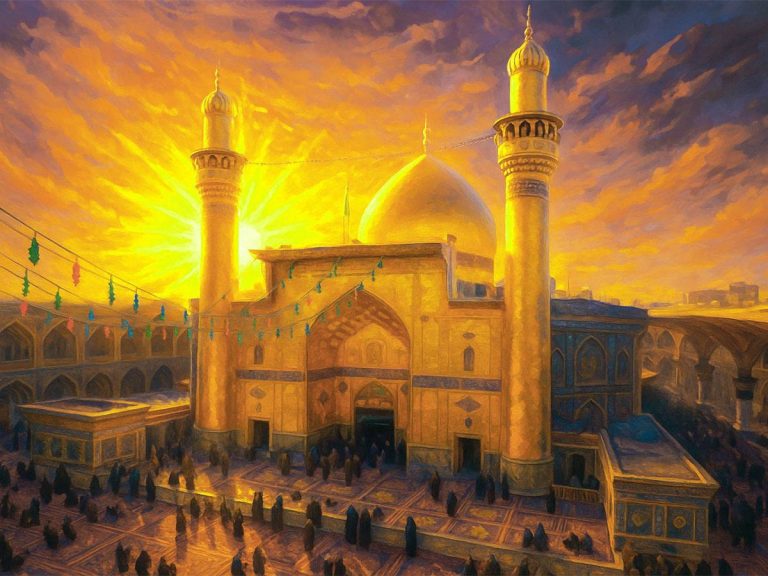
Another name by which Najaf came to be known is al-Mashhad—meaning the place of witnessing or the site of visitation. This title gained currency after the blessed tomb of Imam Ali (peace be upon him) was revealed to the public.
When Imam al-Sadiq (peace be upon him) visited the site, he said to his companion Safwan al-Jammal:
“This is the Mashhad (holy site) of the Commander of the Faithful (peace be upon him).”
He then described the manners of visitation—including ritual bathing (ghusl al-ziyarah) and wearing one’s finest garments.
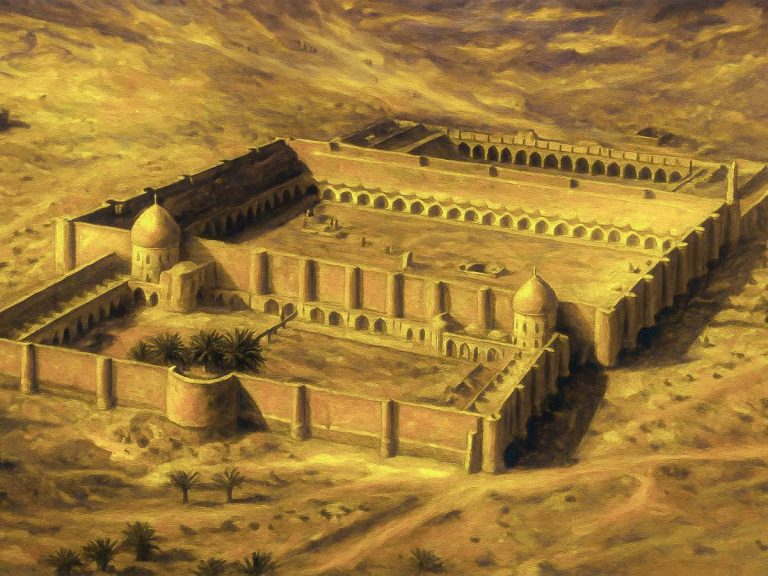
At that time, the shrine had not yet developed into a city. Only the luminous tomb stood amidst the Dhakwat al-Bid—the small white hills surrounding the sacred ground.
Travelers and historians alike have noted this. The geographer al-Harawi referred to it as “Mashhad Amir al-Muminin,” and Ibn Battuta, in his travels, described “the city of Mashhad Ali ibn Abi Talib in Najaf.”
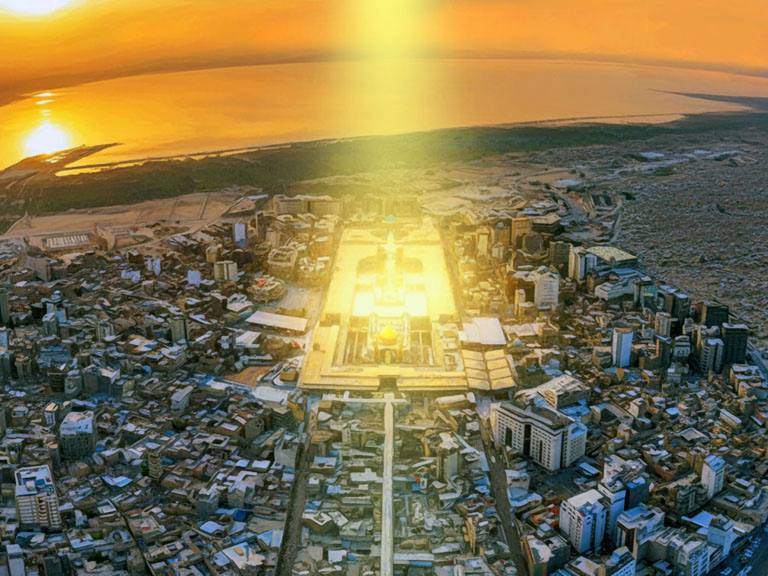
As the city expanded and flourished around the shrine, the name al-Mashhad came to denote not only the tomb itself but the entire city. Consequently, its inhabitants were called al-Mushāhidah, and their attribution became al-Mashhadī—a title still found in poetry and genealogies.
Among those who used it was Sayed Ali Khan al-Madani, who invoked the epithet al-Mashhadi in his poetry upon visiting the holy shrine of Imam Ali (peace be upon him).