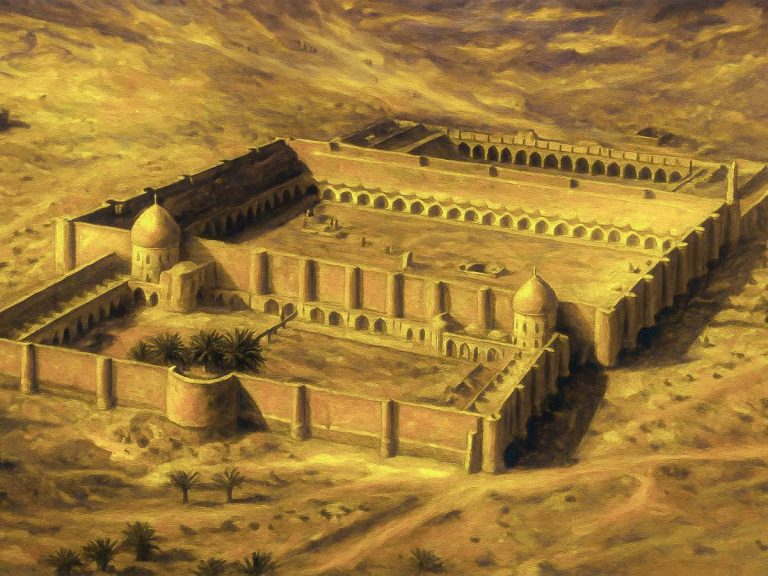
Many of the noble companions of the Imams (peace be upon them) emerged from Kufa. Numerous devout scholars and self-sacrificing figures also came from there. For this reason, the traditions of the Ahl al-Bayt (peace be upon them) speak abundantly of the city’s sanctity and virtue.
The Virtue of the Land of Kufa
Imam Ali (peace be upon him) said:
“The first place upon which Adam (peace be upon him) prostrated was the land of Kufa.”
Imam Jafar al-Sadiq (peace be upon him) mentioned four exalted places:
“al-Bayt al-Mamur, al-Ghari, Karbala, and Tus.”
He also said:
“The guardianship and love of the Ahl al-Bayt (peace be upon them) were accepted only by the people of Kufa. From this land, righteous souls shall enter Paradise.”
Abu Basir narrates from Imam al-Sadiq (peace be upon him):
“When the guardianship of the Ahl al-Bayt was presented to the heavens, the earth, the mountains, and the cities, none accepted it except the people of Kufa.”
Sayed Ibn Tawus narrates that Imam al-Sadiq (peace be upon him) said:
“Kufa is one of the gardens of Paradise. In it lie the graves of Noah, Abraham, three hundred and seventy prophets, six hundred successors, and the resting place of the Commander of the Faithful (peace be upon him).”
The Greatness of the Mosque of Kufa
Shaikh Ibn Qulawayh al-Qumi narrates from Imam al-Sadiq (peace be upon him):
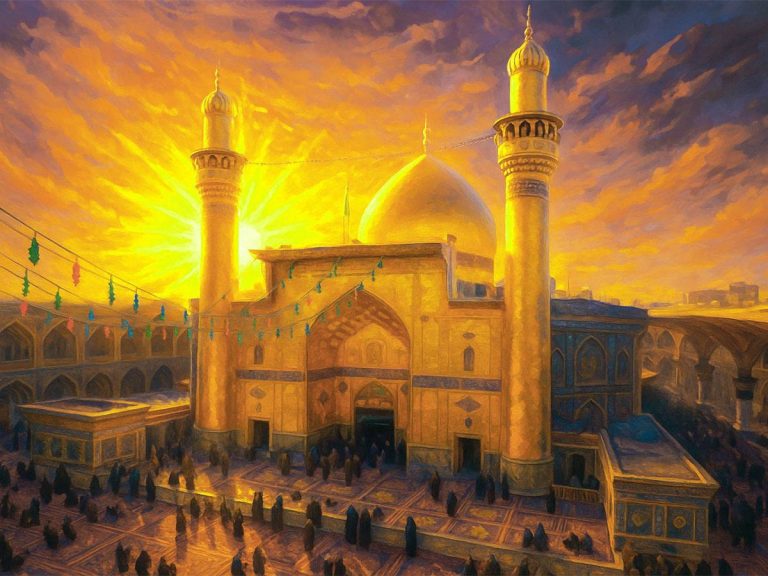
“The Mosque of Kufa possesses countless merits. Obligatory and recommended prayers performed therein carry extraordinary reward. Its blessings extend twelve miles in every direction. Within it are springs of oil, milk, and pure water, and it was the very place where the Ark of Noah passed. Seventy prophets and seventy successors prayed within it, and no believer enters this mosque with a need except that God fulfills it and relieves him of his affliction.”
Allamah al-Majlisi states:
“The blessings of the Mosque of Kufa extend for twelve miles around it. The right side of the mosque is called ‘al-Yaman,’ which, according to some, alludes to the burial place of Imam Ali (peace be upon him).”
Imam al-Sadiq (peace be upon him) also said:
“No righteous servant or prophet has lived except that he prayed within the Mosque of Kufa. When the Messenger of God (peace be upon him and his family) ascended during the Miraj, Gabriel said to him, ‘You are now facing the Mosque of Kufa.’ By divine permission, he descended and prayed two units of prayer there.”
The Distinct Virtues of the Mosque of Kufa
• Its right side is connected to a garden from among the gardens of Paradise.
• Its rear portion, too, opens to a garden of Paradise.
• One obligatory prayer within it equals a thousand prayers, and one recommended prayer equals five hundred prayers elsewhere.
• Simply sitting within it—without recitation or remembrance—is counted as worship.
• If people knew its true merit, they would come to it even by crawling.
Some scholars, such as Mahdi Rajai, have interpreted the “right side” (al-maymanah) of the mosque as referring to the grave of Imam Ali (peace be upon him). They interpret its “rear side” (al-muakhirah) as referring to the resting place of Imam al-Hussain (peace be upon him).
The Purchase of the Land of Kufa
Shaikh al-Saduq narrates from Imam Ali (peace be upon him):
“When Prophet Abraham (peace be upon him) passed through a place called Baniqiya (one of the ancient names of Najaf), the earth would tremble there each night. He spent the night there with his servant, and the tremors ceased.
The people asked him why the trembling had stopped. He replied, ‘I purchased this land so that it would no longer quake.He bought it for seven goats and four donkeys, and for that reason it was named Baniqiya.
His servant said, ‘But this land bears no fruit—what benefit is there in it?’
Abraham replied, ‘From this very soil, God shall admit seventy thousand souls into Paradise without reckoning, and they shall intercede for others.’”
Another narration by Sayed Muhammad ibn Ali al-Alawi states:
“Imam Ali (peace be upon him) purchased the lands extending from Najaf to Hira and Kufa for forty thousand dirhams, saying:
‘These lands are endowed with special virtue, and from them seventy thousand souls shall enter Paradise without account.’”
It has also been narrated that numerous prophets and righteous ones are buried in this blessed region. The lands of Kufa and Karbala are both sanctified and abundant in blessing.
The Spiritual Names and Designations of Kufa
Shaikh al-Saduq narrates from Imam Musa al-Kadhim (peace be upon him) that the Prophet (peace be upon him and his family) said:
“God has chosen four sacred places: al-Tin (Madinah), al-Zaytun (Bayt al-Maqdis), Tur Sinin (Kufa), and this secure city (Makkah).”
Allamah al-Majlisi explains:
“Kufa is called Tur Sinin because the plain of Najaf—the high ground of Kufa—was the place where the Commander of the Faithful (peace be upon him) would engage in intimate supplication to his Lord, just as Prophet Moses (peace be upon him) did upon Mount Sinai.”
“Some reports suggest that a portion of Mount Sinai was transported to this land; others interpret it metaphorically, indicating that both locations were sanctified by divine discourse. Imam Ali (peace be upon him) himself, according to his will, was buried in the high ground of Kufa, known as Tur Sina.”
Kufa and the Sacred Covenant
Al-Kulayni narrates that the Messenger of God (peace be upon him and his family) said to Imam Ali (peace be upon him):
“You are my brother, and the place of our covenant and promise is the Valley of Peace (Wadi al-Salam).”
Jabir ibn Yazid al-Jufi reports from Imam Muhammad al-Baqir (peace be upon him) that the Prophet (peace be upon him and his family) said:
“There will be among my community those who dwell between Hira and the valley of Kufa. God shall safeguard them from tribulation, as He protects His sanctuaries. And whoever seeks to harm them, God shall destroy him.”
The Blessed Valley of Peace
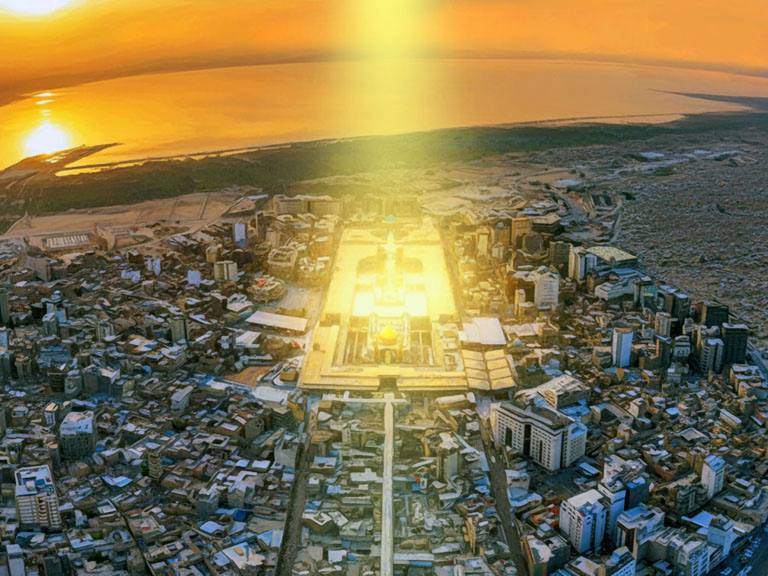
These noble narrations reveal the extraordinary sanctity of Kufa and the Valley of Peace. They highlight their spiritual majesty and eternal blessedness. These lands were chosen by God, sanctified by His prophets, and illuminated by the resting place of the Commander of the Faithful, Imam Ali ibn Abi Talib (peace be upon him).