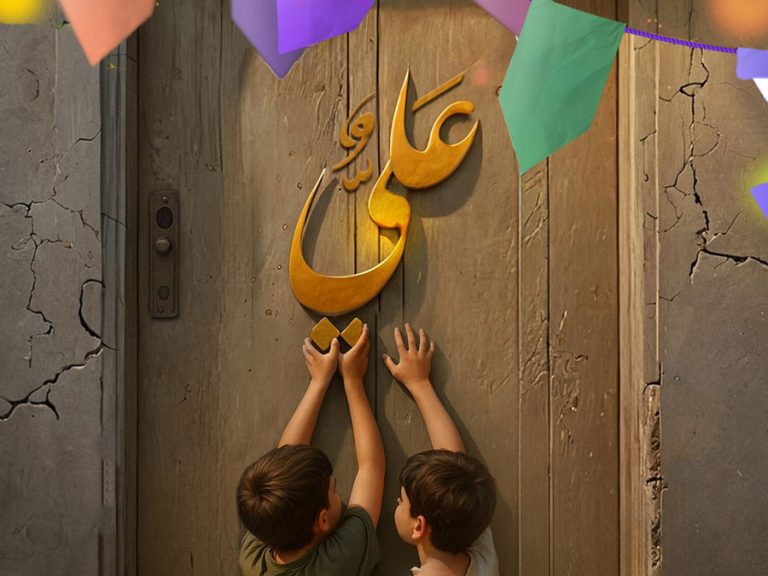

The Imam al-Hadi (peace be upon him) played a central role in elucidating the elevated station of the Imamate, conveying its pure teachings to the Shia through numerous pilgrimage supplications. Among his most notable legacies are the al-Ghadir Pilgrimage and the Comprehensive Supplications. In the al-Ghadir Pilgrimage, he expounds upon the divine basis of Imamate, affirms the legitimacy of Imam Ali’s (peace be upon him) guardianship, and addresses historical deviations following the event of Ghadir.
Period of Imamate and Social Influence
Imam al-Hadi’s (peace be upon him) Imamate spanned over thirty-three years, approximately thirteen of which he spent in Madinah. During this time, numerous delegations from Shia-populated regions in Iran, Iraq, and Egypt visited Madinah to benefit from his guidance.
The Imam gained such a revered position among the people that the Abbasid authorities felt increasingly threatened. Fearing the rise of Shia leadership and potential opposition, they sought to isolate the Imam from Madinah, the hub of Shia activity, employing exile and surveillance as means to limit his influence.
Issuance of the al-Ghadir Pilgrimage
The Abbasid Caliph al-Mutasim summoned Imam al-Hadi (peace be upon him) to Samarra. On the day of Eid al-Ghadir, the Imam visited Najaf and paid homage to Amir al-Muminin (peace be upon him), an act commemorated in the text known as the al-Ghadir Pilgrimage. Classical supplication and pilgrimage texts note that this supplication is traditionally recited on the day of Eid al-Ghadir. Shaikh Abbas Qummi, citing Uthman ibn Said, states that this pilgrimage can be recited daily, whether near or far.
Authenticity of the Pilgrimage
The pilgrimage text is transmitted through a strong chain of narrators. It was reported by Ibn al-Mashhadi from Shadhan ibn Jibril al-Qummi, from Muhammad ibn Ali al-Tabari, from Abu Ali al-Tusi, from his father Shaikh al-Tusi, from Shaikh al-Mufid, from Ibn Qulawayh, from al-Kulayni, from Ali ibn Ibrahim al-Qummi, from his father, and through Hussain ibn Ruh al-Nawbakhti and Uthman ibn Said al-Amri, from Imam Hasan al-Askari (peace be upon him), ultimately from Imam al-Hadi (peace be upon him). Scholars of hadith affirm the chain’s high reliability.
Shaikh Qummi notes that among all extant visitation supplications, none matches the al-Ghadir in both authenticity and strength of narration.
Core Themes of the al-Ghadir Pilgrimage
The central focus of the al-Ghadir Pilgrimage is Tawalli (loyalty) and Tabarri (disassociation from the enemies of the Imamate), emphasizing the virtues of Amir al-Muminin (peace be upon him). Key aspects include:
- Quranic Virtues of the Commander of the Faithful (peace be upon him):
The text cites over thirty Quranic verses, including the Verse of the Night of Bedding (Laylat al-Mabit), the Verse of Propagation (Tebliq), and the Verse of Guardianship (Wilayah), illustrating the Imam’s virtues. - Sayings-based Virtues:
It highlights attributes corroborated by Shia and Sunni sources, such as Seyed al-Wasiyin, Warith Ilm al-Nabi, Wali Rabb al-Alamin, Amin Allah fi Ardihi, and others. - Historical Virtues:
The pilgrimage recounts Imam Ali’s (peace be upon him) historic valor and sacrifices in key battles, including Badr, Uhud, the Trench, Hunayn, Siffin, Jamal, and Nahrawan. It references events such as Fadak, denunciation of the enemies of the Imamate, disassociation from Imam al-Hussain’s (peace be upon him) killers, and the martyrdom of Ammar ibn Yasir, Imam Ali (peace be upon him), and Imam al-Hussain (peace be upon him). - Parallels with the Trials of the Prophets:
The pilgrimage draws analogies between Laylat al-Mabit and the sacrifice of Prophet Ismail (peace be upon him), highlighting submission to divine will. Similarly, the raising of Qurans on spears at Siffin is likened to Prophet Musa’s (peace be upon him) trials and the Israelites’ deviation.
Martyrdom of Imam al-Hadi (peace be upon him): A Consequence of Defending Wilayah
The al-Ghadir Pilgrimage demonstrates that Imam al-Hadi’s (peace be upon him) martyrdom was neither accidental nor purely political. It was the result of his unwavering defense of the principle of Imamate and the continuation of the al-Ghadir legacy—a legacy perceived by the Abbasids as a persistent threat to their authority.
After 33 years of Imamate, his adversaries succeeded in poisoning him by order of Caliph al-Mutazz with the substance administered by al-Mutamid in Samarra. Reliable Shia sources place his martyrdom in the month of Rajab, 254 AH, with Ayatollah Marashi Najafi noting it occurred on Monday, the 3rd of Rajab.
Conclusion
The al-Ghadir Pilgrimage offers a clear window into the thought and teachings of Imam al-Hadi (peace be upon him), as well as the reasons behind his martyrdom. It demonstrates that, even under intense confinement and pressure, the Tenth Imam never wavered in proclaiming the truth of al-Ghadir and the guardianship of Amir al-Muminin (peace be upon him). His martyrdom stands not only as the end of a life but as a historical testament to the enduring struggle for the Imamate and the living message of al-Ghadir throughout Islamic history.