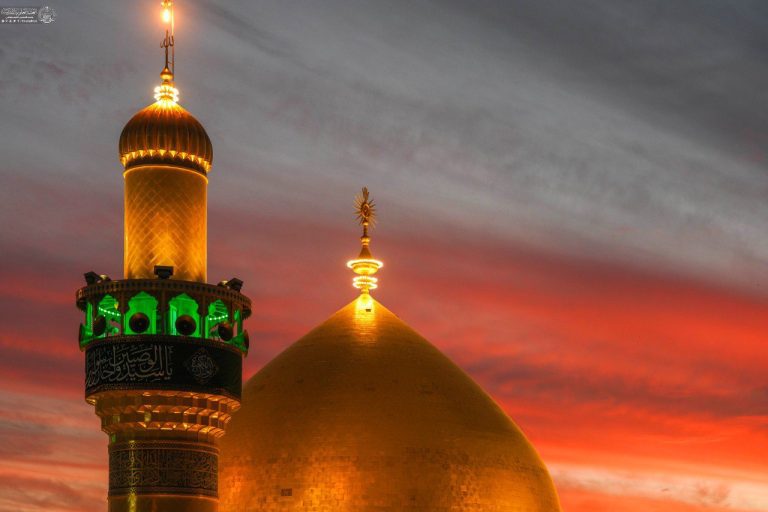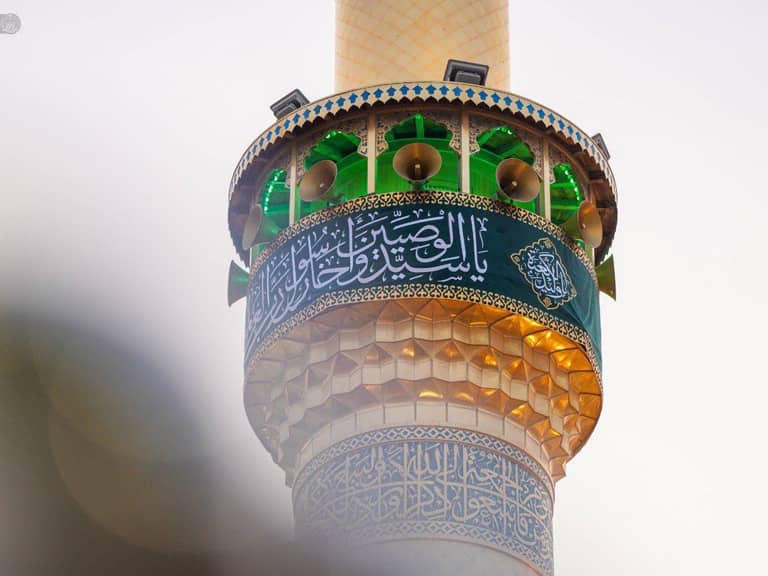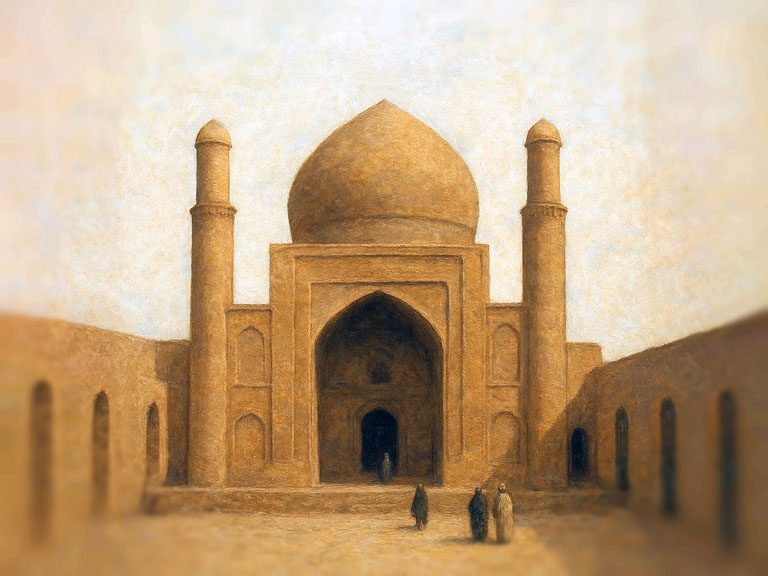
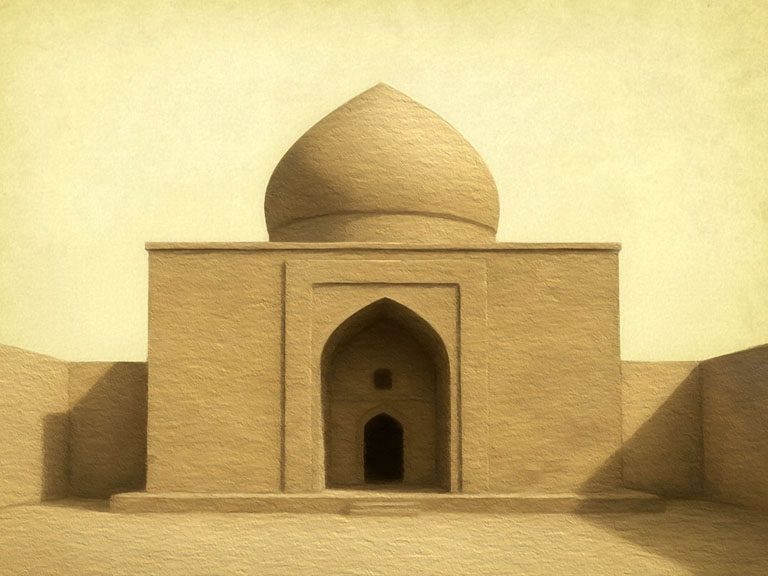
The second architectural structure of the Holy Mausoleum of Amir al-Muminin (peace be upon him) was built by order of the Governor of Mosul, Amir Abu al-Hayja Abdullah ibn Hamdan al-Hamdani, during the early decades of the fourth Hijri century, under the rule of the Abbasid Caliph al-Muqtadir Billah (295–317 AH).
Dr. Salah al-Fartoosi suggests that the date of this construction was likely the year 311 AH, writing as follows:
“None of the researchers have succeeded in determining the exact date of the building of this structure. However, in my view, the most probable date is 311 AH, because Abu al-Hayja was appointed that year to perform Hajj on behalf of the Caliph.
He likely stopped in Kufa on his way—just as pilgrims from Iraq commonly did—to visit the luminous grave of Amir al-Muminin (peace be upon him). It is probable that he issued the decree for the construction of the structure before continuing his journey to the Hajj.”
A Four-Sided Dome
Ibn Hawqal (d. 380 AH) also records:
“Abu al-Hayja Abdullah ibn Hamdan made this site known, establishing around it a fortified enclosure. Over the grave he constructed a grand and towering dome with four corners, with numerous doors. He adorned it with exquisite draperies and covered its floor with the finest carpets. Many of his children and the nobles of the Ahl al-Bayt were buried outside this dome, and the land surrounding the great enclosure was designated as a burial ground for the Ahl al-Bayt.”
This enclosure is the first wall to surround the newly established settlement that developed around the sacred grave—encircling it in the way a bracelet surrounds the wrist. Historical texts indicate that burials were carried out within the developing city and adjacent to its walls.
-
The geographer al-Idrisi (d. 559 AH) writes:
“At a distance of six kilometers from Kufa stands a lofty and magnificent dome that has four corners. Each side has doors that remain closed and is covered with precious curtains. Its floor is spread with fine carpets. It is said that the grave of Ali ibn Abi Talib is located within it and that the surrounding area serves as the burial site of the Ahl al-Bayt. This dome was constructed by Abu al-Hayja Abdullah ibn Hamdan during the Abbasid era, after the grave had remained hidden during the Umayyad period.”
Ibn Wardi (d. 852 or 861 AH), writing about Kufa, states:
“In Kufa there is a great dome believed to contain the grave of Ali ibn Abi Talib, and around the dome lie the graves of the progeny of Ali. This dome was built by order of Abu al-Abbas Abdullah ibn Hamdan during the Abbasid period.”
Shaikh Jafar Mahbubah also narrates, citing the manuscript of Shaikh Ali Al Kashif al-Ghita titled Samir Hadir wa-Anis Musafir:
“The Hamdanid family would transfer their deceased from Syria, Aleppo, Diyarbakr, Mosul, Fars, and Iraq to Najaf, and they would present their most valuable offerings to the grave of the Commander of the Faithful (peace be upon him)—including pure gold and silver lamps, gem-studded swords, and precious items gifted by kings, noblemen, women, daughters, and their descendants. At the time of the writing of this work, these objects were preserved in the treasury of the Alawi Shrine in al-Ghari.”