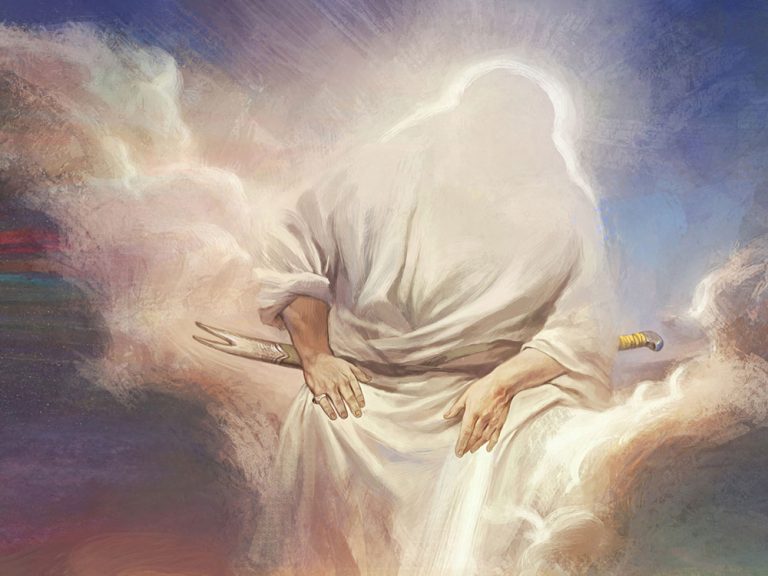
The birth of Amir al-Muminin (peace be upon him) inside the House of God is a virtue unanimously affirmed by Shia hadith scholars and acknowledged by many scholars of Ahl al-Sunnah, all of whom regard it as a distinction unparalleled in history.
The Role of the Parents of Amir al-Muminin (peace be upon him) in the Life of the Seal of Prophets
His noble father was Abu Talib (peace be upon him), and his honorable mother was Lady Fatimah bint Asad, daughter of Hashim ibn Abd Manaf, the lady of the household of Abu Talib (peace be upon him).
She was not only the mother of Amir al-Muminin (peace be upon him), but after the passing of Abd al-Muttalib (peace be upon him), when Prophet Muhammad (peace be upon him and his family) was six or eight years old and entrusted to the care of Abu Talib (peace be upon him), Fatimah bint Asad (may God be pleased with her) served him with the devotion of a mother, placing him above her own children, witnessing daily signs of prophethood in him. In return, Prophet Muhammad (peace be upon him and his family) addressed her as “mother.”
Likewise, following the passing of Lady Khadijah al-Kubra (peace be upon her), Prophet Muhammad (peace be upon him and his family) entrusted Lady Fatimah al-Zahra (peace be upon her) to Lady Fatimah bint Asad (may God be pleased with her), who raised her with compassion and honor until the end of her life.
Lady Fatimah bint Asad (may God be pleased with her) passed away in the fourth year after Hijra in Madinah and was buried in al-Baqi. When Amir al-Muminin (peace be upon him) informed the Prophet (peace be upon him and his family) of her passing, he said, “She was my mother.” He then gave his own turban and garment to shroud her and led the funeral prayer, reciting forty takbirs, saying, “Because forty ranks of the angels prayed over her, I said forty takbirs.” He lay down in her grave, recited the talqin, and prayed for her.
The Light of Amir al-Muminin (peace be upon him) in the Loins of His Forefathers
The narration of his blessed birth also testifies to the steadfast faith of his mother, Lady Fatimah bint Asad (may God be pleased with her). The light that descended from the Throne of God was transferred from one prophet and successor to another until it reached Abd al-Muttalib (peace be upon him), and then it separated—one portion manifesting in the forehead of Abdillah (peace be upon him), father of Prophet Muhammad (peace be upon him and his family), then transferred to Lady Amina (peace be upon her), and finally to the countenance of the Seal of the Prophets (peace be upon him and his family). The other portion appeared upon the forehead of Abu Talib (peace be upon him).
The Children of Abu Talib (peace be upon him)
God granted Abu Talib (peace be upon him) sons: Aqeel, Talib, Jafar, Fakhita (Umm Hani), Jumana, and Imam Ali, Amir al-Muminin (peace be upon him). When God bestowed Imam Ali (peace be upon him) upon Abu Talib and Lady Fatimah bint Asad (may God be pleased with her), that light shone radiantly upon her face.
The Place of His Birth
The birthplace of Amir al-Muminin (peace be upon him) is the most honored of all places: the Sacred Precinct. The most honored location within the sacred precinct is the mosque, and the most honored mosque is the Mosque of Kufa. No child other than him has ever been born in such a place, and his birth occurred on the master of days, Friday, inside the House of God, during a sacred month.
Amir al-Muminin (peace be upon him) did not open his blessed eyes for three days, until he was brought before Prophet Muhammad (peace be upon him and his family). There he opened his eyes, and the Prophet said, “He favored me with his gaze, and I favored him with my knowledge.” He then held him and brought him to the home of Abu Talib (peace be upon him).
Foretelling the Birth of Amir al-Muminin (peace be upon him)
Jabir ibn Abdillah narrates:
“There was a monk named Mathram ibn Raib who worshipped for 190 years, never asking God for anything. One day he desired to behold one of God’s chosen ones. God sent Abu Talib (peace be upon him) to him. When he learned who he was, he told him: ‘O Abu Talib, God will grant you a son who is a friend of God; his name is Ali. When you meet him, convey my greetings and tell him that Mathram the monk bears witness to the Oneness of God and testifies to your guardianship, O Amir al-Muminin (peace be upon him).’”
Heavenly Fruits
When Abu Talib (peace be upon him) departed, he ate heavenly dates, grapes, and pomegranates, then returned home. Lady Fatimah bint Asad (may God be pleased with her) ate from dates given to her by Prophet Muhammad (peace be upon him and his family), who said, “Only one who believes in the Oneness of God and in my prophethood shall eat from these dates.” After both parents partook of the heavenly fruits, the existence of Ali ibn Abi Talib (peace be upon him), Master of the Monotheists, came into being. During her pregnancy, Lady Fatimah bint Asad (may God be pleased with her) became more radiant and luminous.
Events Before the Birth
When the noble existence of Amir al-Muminin (peace be upon him) settled in her womb, an earthquake shook Makkah. Quraysh took their idols to Mount Abu Qubays, but the tremors became stronger, and the idols fell upon their faces. They sought refuge in Abu Talib (peace be upon him), and he said, “Tonight an extraordinary matter has occurred. God has created a being who, if you do not obey him, acknowledge his guardianship, and testify to his Imamate, this earthquake shall not cease.” With tears, he prayed, “My Lord, I appeal to You by the sanctity of Muhammad the Chosen, Ali the Exalted, and Fatimah the Radiant, that You bestow Your mercy upon Tihama.” The people said, “Amen,” and the tremor ceased. The Arabs of the pre-Islamic era recited this supplication whenever calamities befell them, and their hardship was relieved.
The Call to Lady Fatimah bint Asad to Approach the Kaaba
On Friday night, the thirteenth of Rajab, she experienced labor pains. When Abu Talib (peace be upon him) went to seek assistance from the women of Quraysh, a heavenly voice called, “O Abu Talib, wait, for no impure hand shall touch the guardian of God.”
At dawn, Fatimah bint Asad (may God be pleased with her) heard a voice: “O Fatima, come to Our House.” Abu Talib (peace be upon him) and Prophet Muhammad (peace be upon him and his family) accompanied her to the Sacred Mosque. Abbas ibn Abd al-Muttalib and others saw her stand before the Kaaba, raise her gaze, and supplicate, “My Lord, I believe in You and in Your prophets and the scriptures You have revealed. I affirm the word of my forefather Ibrahim, your friend, who built this house. I beseech You by the sanctity of the one who built this House, and by the sanctity of the child within me who speaks to me and comforts me, whom I am certain is a sign of Your greatness, make this birth easy for me.”
The Splitting of the Wall of the Kaaba
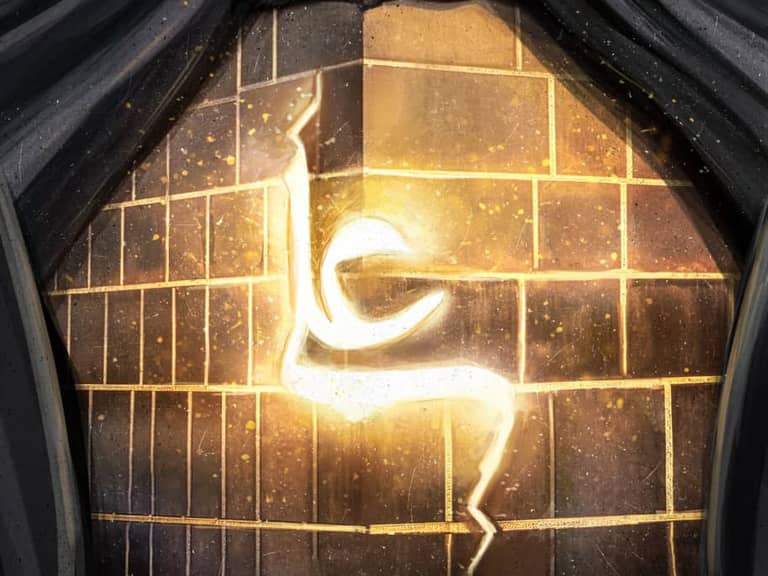
Suddenly the wall of the Kaaba split open, and she entered. They tried to open the door, but it would not open, and the people realized this was a divine command.
Lady Fatimah bint Asad (may God be pleased with her) narrates:
“When I entered, I saw Hawwa, Sarah, Asiya the mother of Musa, and Maryam the mother of Isa. They greeted me with: ‘Peace be upon you, O servant of God,’ and sat before me.”
What occurred at the birth of the Seal of the Prophets (peace be upon him and his family) occurred likewise at the birth of Ali ibn Abi Talib (peace be upon him), for Fatimah bint Asad (may God be pleased with her) had been present at the birth of Prophet Muhammad (peace be upon him and his family) and reported it to Abu Talib (peace be upon him), who had told her, “Thirty years shall pass before God grants you a child like the Seal of the Prophets, except that he shall be his successor and minister.”
The Day of Birth
On Friday, Ali ibn Abi Talib (peace be upon him) emerged like the rising sun upon a red stone within the right corner of the Kaaba. When his blessed feet touched the earth, the idols fell upon their faces, and the heavens were filled with light. Satan cried, “Woe to the idols and their worshippers from this child.”
Three Days in the Kaaba
Lady Fatimah bint Asad (may God be pleased with her) remained inside the Kaaba for three days, then, holding her noble child, prepared to exit, when a heavenly voice called,
“O Fatimah, name this child Ali, for I am God, the Most High (al-Ali). I have taken his name from My own Name. I have taught him manners, entrusted My command to him, and granted him knowledge of the hidden. He shall be the first to proclaim the call to prayer upon My House, and he shall break the idols and cast them down. Blessed is the one who loves him, obeys him, and supports him; wretched is the one who hates him, disobeys him, humiliates him, or denies his right.”
During those three days, every gathering spoke of this extraordinary birth, the unbroken lock of the Kaaba, and the splitting of its wall witnessed by the disbelievers, turning it into public knowledge.
Amir al-Muminin in the Arms of the Prophet (peace be upon him and his family)
On the fourth morning, as the people watched, the wall of the Kaaba opened once again from the same place, and Lady Fatimah bint Asad (may God be pleased with her) emerged with her newborn. Before anyone asked, she described what she witnessed inside, the heavenly nourishment, and the naming of the child by a heavenly command.
Abu Talib (peace be upon him) and Prophet Muhammad (peace be upon him and his family) approached. The Prophet (peace be upon him and his family) embraced the infant, kissed him, and placed his blessed hands upon him. The newborn then sought permission to recite the scriptures; after the Prophet (peace be upon him and his family) granted permission, he straightened his chest and recited the pages of Adam, Noah, Abraham, Moses, and Jesus (peace be upon them) before returning in the arms of the Messenger of God (peace be upon him and his family) to the house of Abu Talib (peace be upon him).
On the third day after birth—or the third day after exiting the Kaaba, and in some narrations the tenth of Dhu al-Hijjah—Abu Talib (peace be upon him) held a banquet, saying, “Come to the feast of Ali ibn Abi Talib, but first circumambulate the Kaaba seven times, then offer salutations to my son Ali (peace be upon him).”
The Childhood of Amir al-Muminin (peace be upon him)
Amir al-Muminin (peace be upon him) said regarding his childhood and life with the Prophet (peace be upon him and his family):
“In my childhood, the Prophet (peace be upon him and his family) held me in his arms, placed me upon his chest, chewed food and placed it in my mouth, and allowed me to breathe the fragrance of his sacred being. He found in my words no lie and in my deeds no error or foolishness. God assigned the greatest of angels to accompany him from infancy, guiding him day and night to noble character and goodness. I followed him as a nursing infant follows its mother, mirroring his actions. Each year he would go to Mount Hira, and at that time none saw him except me.”